

Kontraktor Kolam Renang Bali: Panduan Memilih yang Tepat untuk Villa dan Rumah Anda
October 12, 2026Easy DIY Pool Maintenance: 9 Simple Tips to Keep Your Home Pool Sparkling Clean
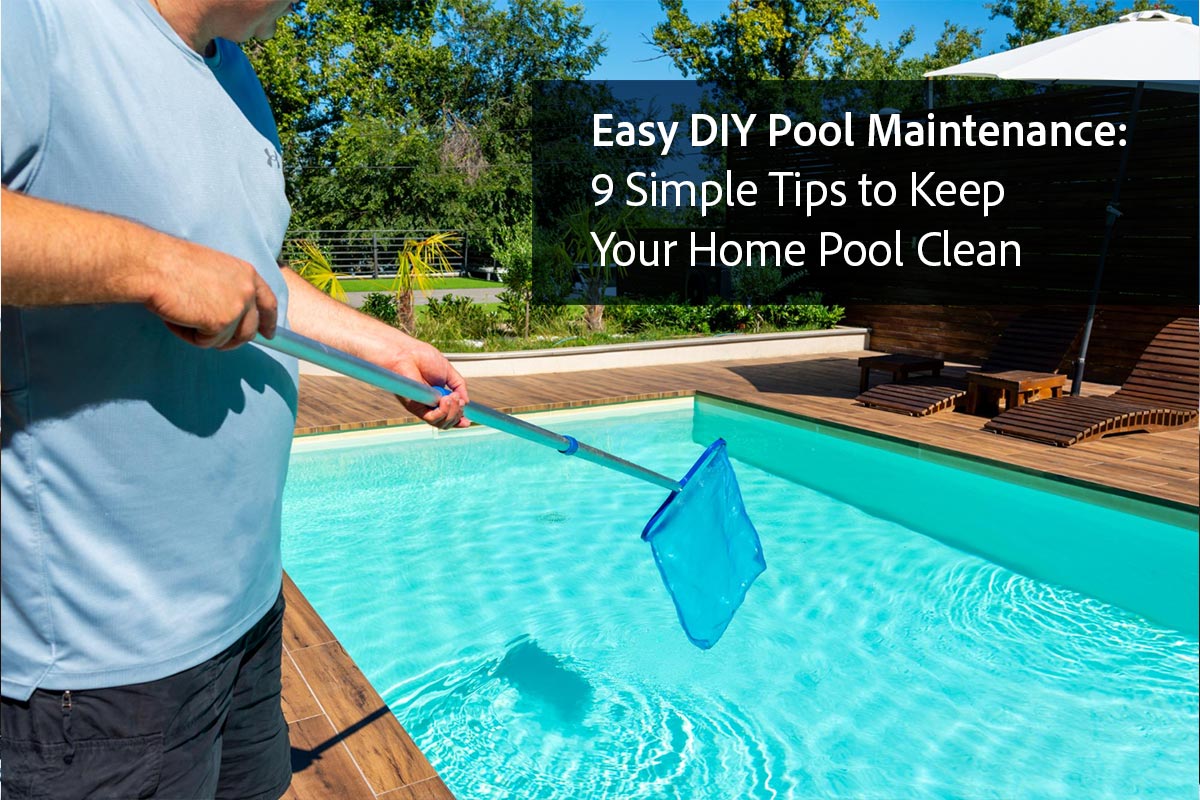
Owning a swimming pool at home is a joy, until the water turns cloudy, green, or filled with leaves. The good news? You don’t need to hire an expensive service to keep your pool in great shape. With a few simple habits and the right tools, DIY pool maintenance is easy, affordable, and takes just a few minutes a day.
In this guide, you’ll learn practical pool cleaning tips that any homeowner can follow, even if you’re a complete beginner.
Why DIY Pool Maintenance Is Worth It
Regular pool care does more than keep the water looking nice. It also:
- Saves money on professional cleaning fees and costly repairs
- Protects your equipment such as the pump, filter, and pool liner
- Keeps swimmers safe by preventing bacteria and algae growth
- Extends the life of your pool by avoiding stains and surface damage
A consistent routine is much cheaper than fixing a neglected pool.
Tools You Need to Get Started
Before you begin, gather these basic supplies:
- Telescopic pole
- Leaf skimmer net
- Pool brush
- Manual or automatic pool vacuum
- Water test kit or test strips
- Pool chlorine (tablets or granules)
- pH increaser and pH decreaser
- Pool shock treatment
Most of these items are inexpensive and available at pool supply or hardware stores.
1. Skim the Surface Every Day
Leaves, insects, and debris land on your pool every day. If left alone, they sink to the bottom, decompose, and feed algae.
Use a leaf skimmer to scoop floating debris off the surface. This takes only a few minutes and is the easiest way to keep your pool water clean. If your pool is surrounded by trees, skim twice a day.
2. Empty the Skimmer and Pump Baskets Weekly
Your pool’s skimmer basket and pump basket catch debris before it reaches the filter. When they’re full, water flow drops and your pump has to work harder.
Check both baskets at least once a week, and more often during windy or rainy seasons. Empty them, rinse them off, and put them back.
3. Brush the Walls and Floor
Algae and dirt cling to pool walls, steps, and corners, even when the water looks clear. Brushing loosens this buildup so your filter can remove it.
Brush your pool once a week, paying extra attention to:
- Shaded areas
- Steps and ladders
- Corners and behind pool lights
- Areas with poor water circulation
Use a nylon brush for vinyl and fiberglass pools, and a stiffer brush for concrete or plaster pools.
4. Vacuum the Pool
Even with skimming and brushing, fine dirt settles on the bottom. Vacuum your pool once or twice a week to remove it.
A manual vacuum connected to your skimmer works well and costs little. If you want to save time, a robotic pool cleaner can do the job automatically.
5. Test Your Pool Water Regularly
Balanced water is the secret to a healthy pool. Test the water 2 to 3 times per week during swimming season using test strips or a liquid test kit.
Aim for these ideal ranges:
- pH level:2 to 7.6
- Free chlorine: 1 to 3 ppm (parts per million)
- Total alkalinity: 80 to 120 ppm
- Calcium hardness: 200 to 400 ppm
If the pH is too high, chlorine becomes less effective. If it’s too low, the water can irritate skin and eyes and corrode equipment. Adjust with pH increaser or decreaser as needed.
6. Keep Chlorine Levels Steady
Chlorine kills bacteria and prevents algae. Add chlorine tablets to a floating dispenser or feeder, or use granular chlorine according to the package directions.
A few helpful rules:
- Add chlorine in the evening, since sunlight burns it off quickly
- Never mix different types of chlorine
- Always follow the dosage instructions on the label
- Store chemicals in a cool, dry place away from children and pets
7. Shock the Pool When Needed
Pool shock is a concentrated dose of sanitizer that clears out bacteria, algae spores, and organic waste. Shock your pool:
- Every 1 to 2 weeks in the summer
- After heavy rain
- After a pool party or heavy use
- When the water looks cloudy or smells strongly of chlorine
Apply shock in the evening and run the pump overnight. Wait until chlorine levels return to the safe range before swimming again.
8. Run the Pump and Clean the Filter
Circulation keeps water clean. Most pools need to run the pump 8 to 12 hours a day so the entire volume of water passes through the filter at least once.
Your filter also needs attention:
- Sand filters: backwash when the pressure gauge rises 8 to 10 psi above normal
- Cartridge filters: rinse with a hose every few weeks and replace yearly
- DE filters: backwash and recharge as directed by the manufacturer
A clean filter means clearer water and lower energy bills.
9. Maintain the Right Water Level
Keep the water level around the middle of the skimmer opening. If it drops too low, the pump can suck in air and overheat. If it’s too high, the skimmer can’t work properly.
Top up with a garden hose after evaporation, and check regularly for unexplained water loss, which may signal a leak.
Simple Pool Maintenance Schedule
Daily: Skim the surface and check the water visually.
2-3 times per week: Test the water and adjust chlorine and pH.
Weekly: Brush walls, vacuum, empty baskets, and check the water level.
Every 1-2 weeks: Shock the pool.
Monthly: Rinse the filter and check equipment for wear or leaks.
Common Pool Problems and Quick Fixes
Cloudy water: Usually caused by poor filtration or unbalanced chemicals. Test the water, shock the pool, and run the pump longer.
Green water: A sign of algae. Brush the pool, shock heavily, and run the filter continuously until clear.
Strong chlorine smell: Ironically, this means too little free chlorine and too many chloramines. Shock the pool to fix it.
Scale or white buildup: Often caused by high calcium or pH. Lower the pH and adjust water hardness.
DIY pool maintenance doesn’t have to be complicated. With a simple routine of skimming, brushing, testing, and filtering, you can enjoy crystal-clear water without spending a fortune on professional services.
Start with the basics, stay consistent, and your home pool will stay clean, safe, and inviting all year long.


